 UN Sustainable Development Goal 18
Freedom needs the whole picture.
Media diversity protects democracy.
Free, safe and sustainable media are an essential component of a democratic society, that promotes human rights, the rule of law and sustainable development for all.

Our manifesto
We call for the recognition of a diverse media landscape with valid content as a cornerstone of democracy. We therefore call for free, safe and sustainable media to be included and promoted as the 18th Sustainable Development Goal of the United Nations, complementing and reinforcing the existing SDGs.
Manifesto
How you can support Initiative18
Our vision of a free, safe and sustainable media landscape thrives on the engagement of many: whether as a voice, a partner or a supporter. If you share the goals of Initiative18 and want to advocate for strong media diversity, press freedom and democracy, there are several ways to get involved:
- Petition sign – Your voice counts: Support our call to establish media freedom as the 18th Sustainable Development Goal.
- Enter competence partnerships – We are looking for experts from business, science and research who identify with our eight sub-goals and want to think and act together with us.
- Support & Donate – Help us build and expand the impact of our association – as a supporter or through foundations.
With your donation, you help us further develop our structures – so that we can achieve our goals even more effectively and sustainably.
Kontoinhaber: Initiative 18 - free, safe & sustainable media e.V.
IBAN: DE24 3705 0198 1958 1658 52
BIC: COLSDE33XXX
Bank: SPARKASSE KOELNBONN
We are happy to provide a donation receipt upon request.
Become part of this initiative: Together we make the picture more complete. If you would like to get involved, please contact us directly at: info@initiative18.org
Our sub-goals: A signpost for a democratic media landscape
Initiative18 pursues clear and concrete sub-goals that together help to promote a diverse, free and sustainable media landscape. Each of these sub-goals represents a key aspect of our mission: protecting and strengthening press freedom, promoting media diversity, using technology responsibly and combating disinformation. Through targeted measures and collaborations, we are committed to a fair, transparent and democratic media future. Discover how we want to realise this vision.
Our Partners


Initiative18 Campaign “Freedom Needs the Whole Picture.”
To make this message tangible, we turn to a powerful symbol: iconic images that have burned themselves into our collective memory. Images that sparked debates, stirred emotions, marked historical turning points. The lifeless body of Alan Kurdi washed up on a beach. The man who stood alone against a column of tanks in Beijing. The footprint of the first human on the Moon. The girl running naked, crying and burned down a road in Vietnam after a napalm attack. All of these photographs show moments that moved the world – and they only became global symbols because they were told through many media and from different perspectives. In our campaign, each motif is missing a piece: a cut-out puzzle piece. It represents what disappears when media diversity is lost. If a piece is missing, the picture is incomplete – and so is our understanding of the truth. We do not judge the events these images depict. Each motif tells stories that people interpret differently – sometimes contradictory, often emotional. That is precisely the point: a diverse media landscape provides space for all of these viewpoints, side by side and in dialogue. Only in this way can a complete picture emerge, carried not by a single voice, but by the sum of many perspectives.
Media diversity protects democracy.
Because freedom needs the whole picture.
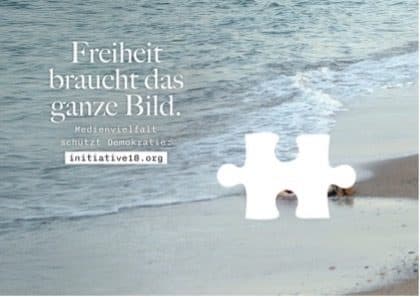
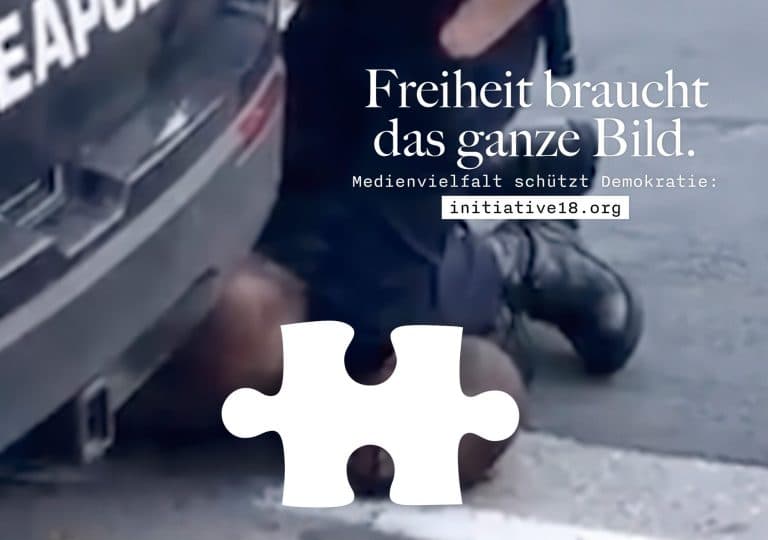
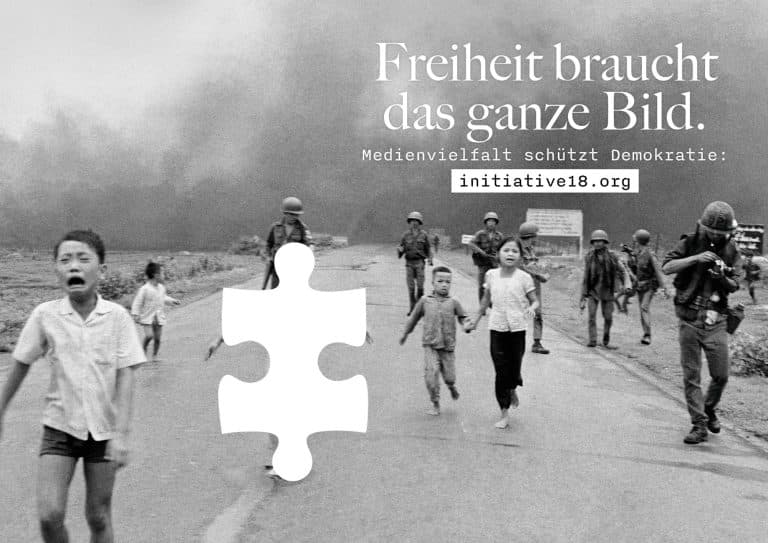
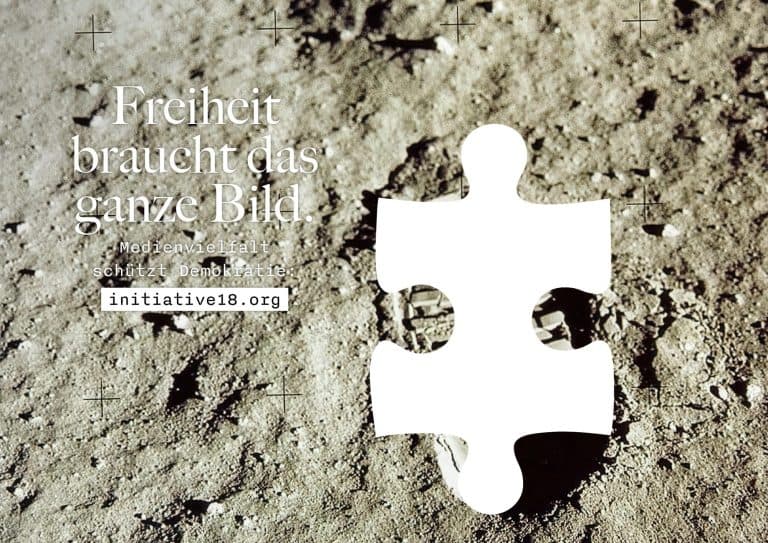
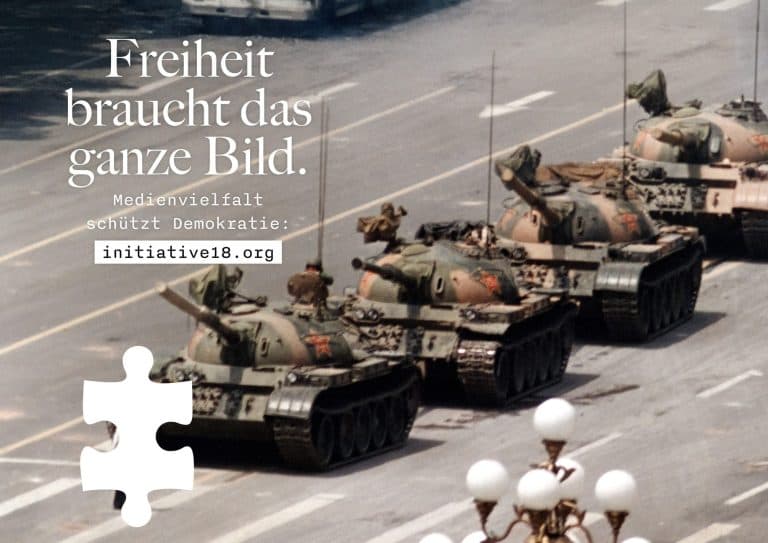
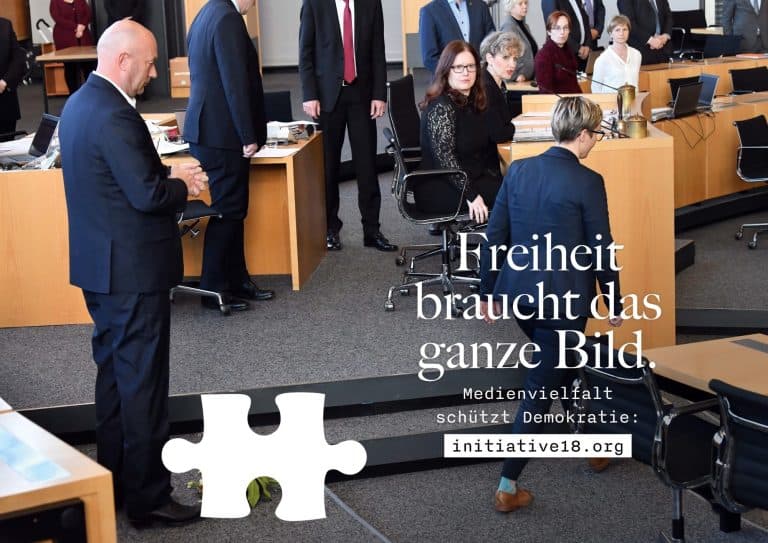
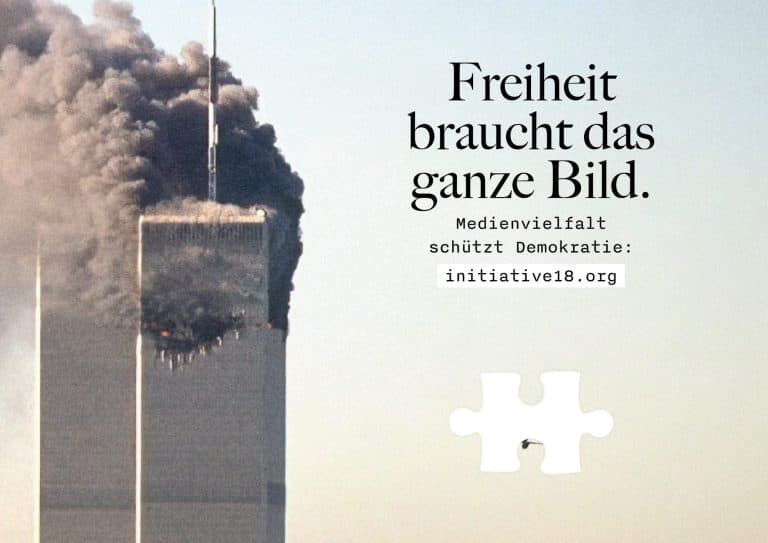
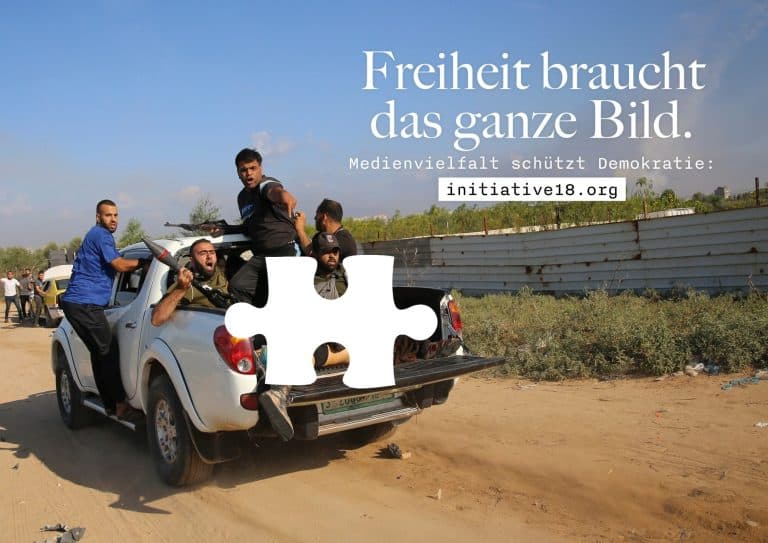

Media diversity and trustworthy content are indispensable as a corrective for disinformation and fake news. Advertising clients and media agencies can contribute to the preservation of media diversity and thereby strengthen democracy. Equally, there needs to be a discourse with advertising-relevant platforms and media houses about their social responsibility.
Manfred Kluge
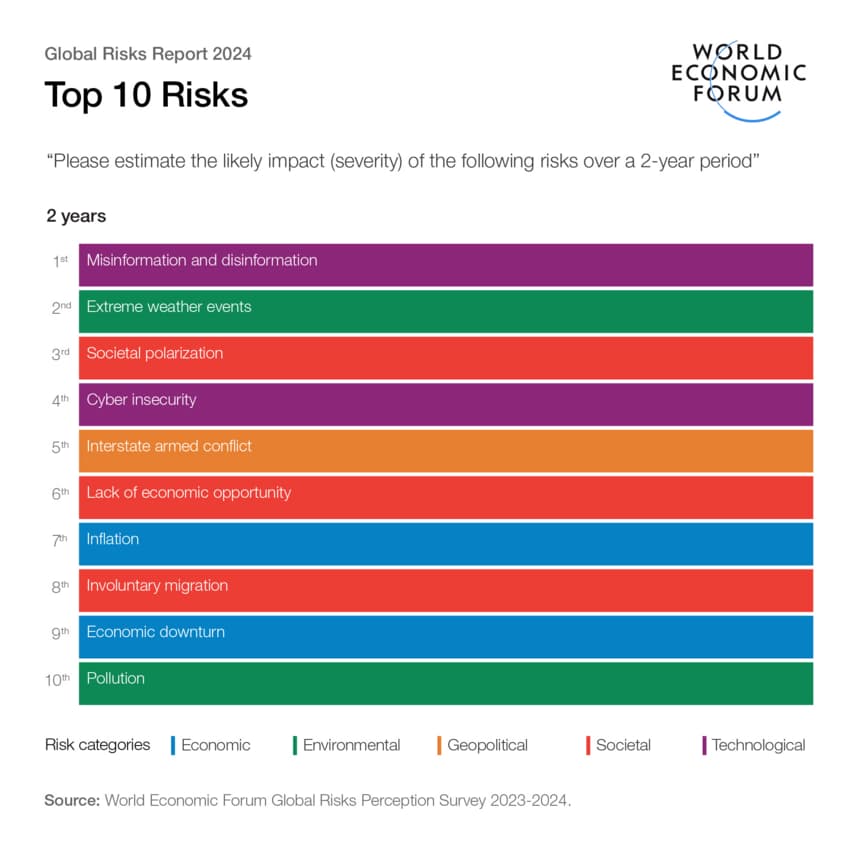
The Growing Danger of Disinformation: A Threat to Democracy and Society
The World Economic Forum classifies disinformation as one of the fastest-growing global risks. This threat destabilises elections, undermines trust in governments and media, and deepens societal divisions. With the rapid spread of AI-generated disinformation, society's ability to distinguish facts from fabrications is increasingly being compromised. This development threatens not only social cohesion but also the stability of democratic processes worldwide.
Initiative18 addresses precisely where the risk of disinformation is greatest: in securing a diverse and independent media landscape. By promoting press freedom, media literacy and hybrid business models for media, Initiative18 can help curb the spread of disinformation and restore trust in fact-based reporting. These approaches strengthen society's resilience against the manipulative power of disinformation and thus make a decisive contribution to stabilising democratic processes.
Further information: wef.ch/risk24The Crucial Connection Between Press Freedom and Democracy: A Data-Driven Insight
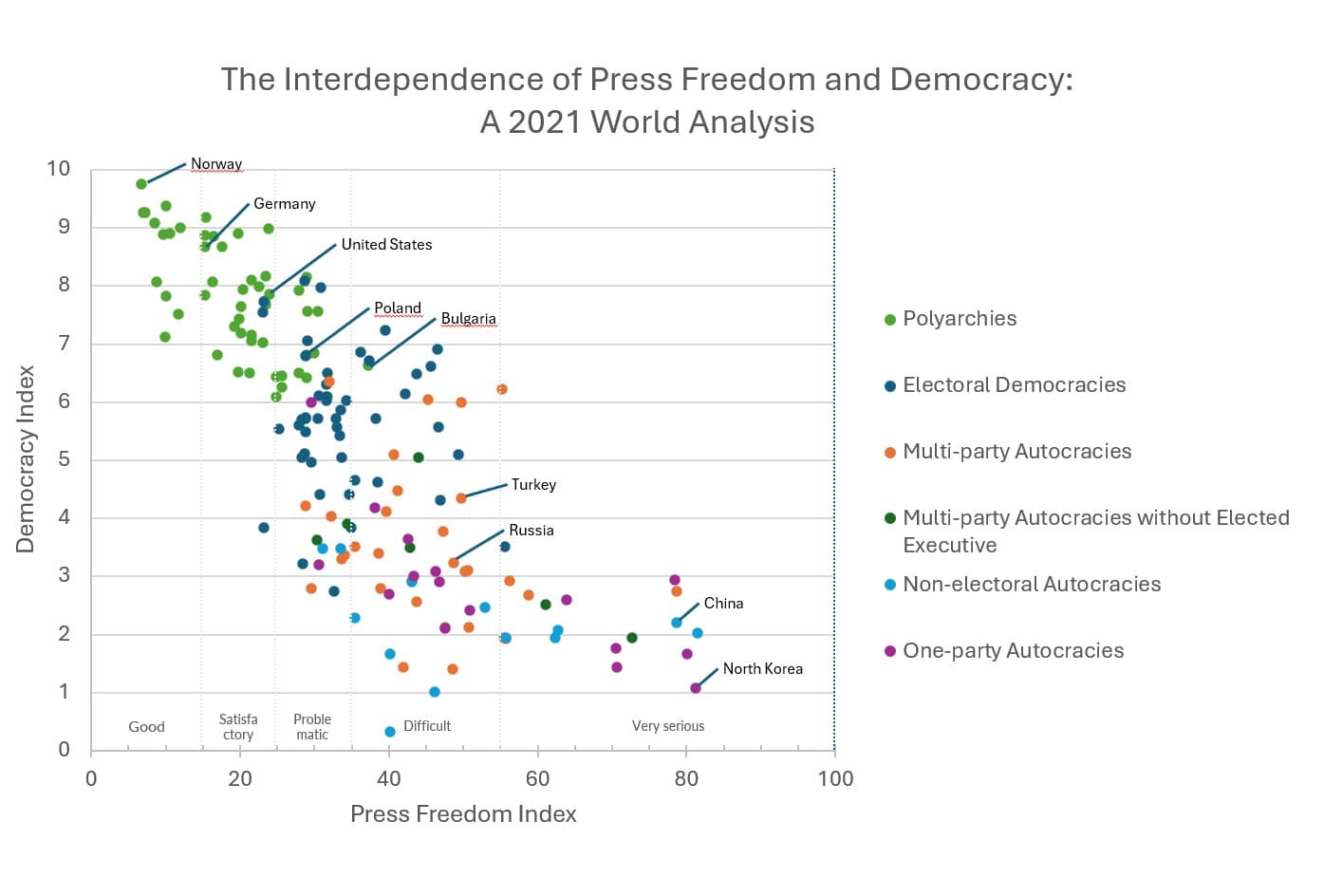
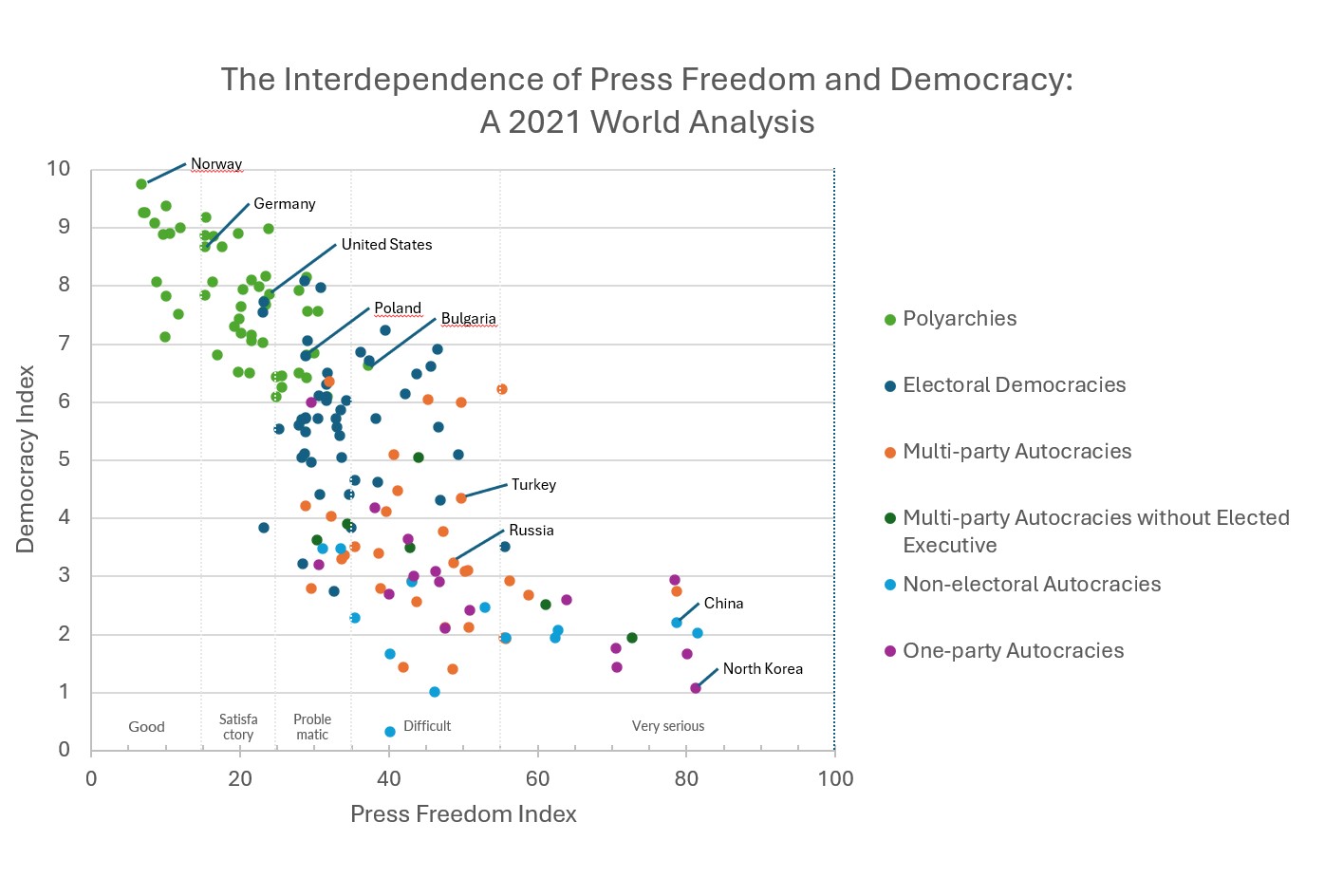
Current data paints a compelling picture of the close relationship between press freedom and democracy. At a time when the integrity of democratic institutions is increasingly being questioned, the importance of a free press cannot be overstated.
Across Europe and beyond, data from 2021 reveals a troubling trend: countries where press freedom has significantly declined often also record a corresponding drop in their democracy scores. Take Turkey, for example. In 2021, the country experienced a dramatic decline in press freedom: the press freedom score fell to 50.76, representing a significant deterioration from previous years. This deterioration in press freedom is reflected in a decline in Turkey's democracy score, which fell to 4.35, classifying the country more as a “hybrid regime” than a full democracy.
Turkey is not an isolated case. In Poland, a country often praised as a post-Cold War success story, a similar pattern can be observed. The press freedom situation has deteriorated significantly, with the score dropping by over 11 points, moving the country further from the ideals of a free society. This deterioration coincided with growing concerns about the erosion of democratic norms in Poland, underscoring the crucial role that a free press plays in preserving democracy.
The data underscores a crucial truth: press freedom is not merely a barometer for the state of democracy – it is an essential component of it. When the press is suppressed, or its financial basis is removed, the flow of information is disrupted, leading to a less informed public, weakened accountability, and ultimately a weaker democracy. As nations around the world grapple with challenges to democracy and press freedom, this data serves as a stark reminder that the two are inextricably linked. To protect one, we must preserve the other. At a time when authoritarianism and populism are on the rise, supporting and defending press freedom is more important than ever for the well-being and future of democratic societies worldwide.